Council Approves Permanent Revisions to Open Meeting Law
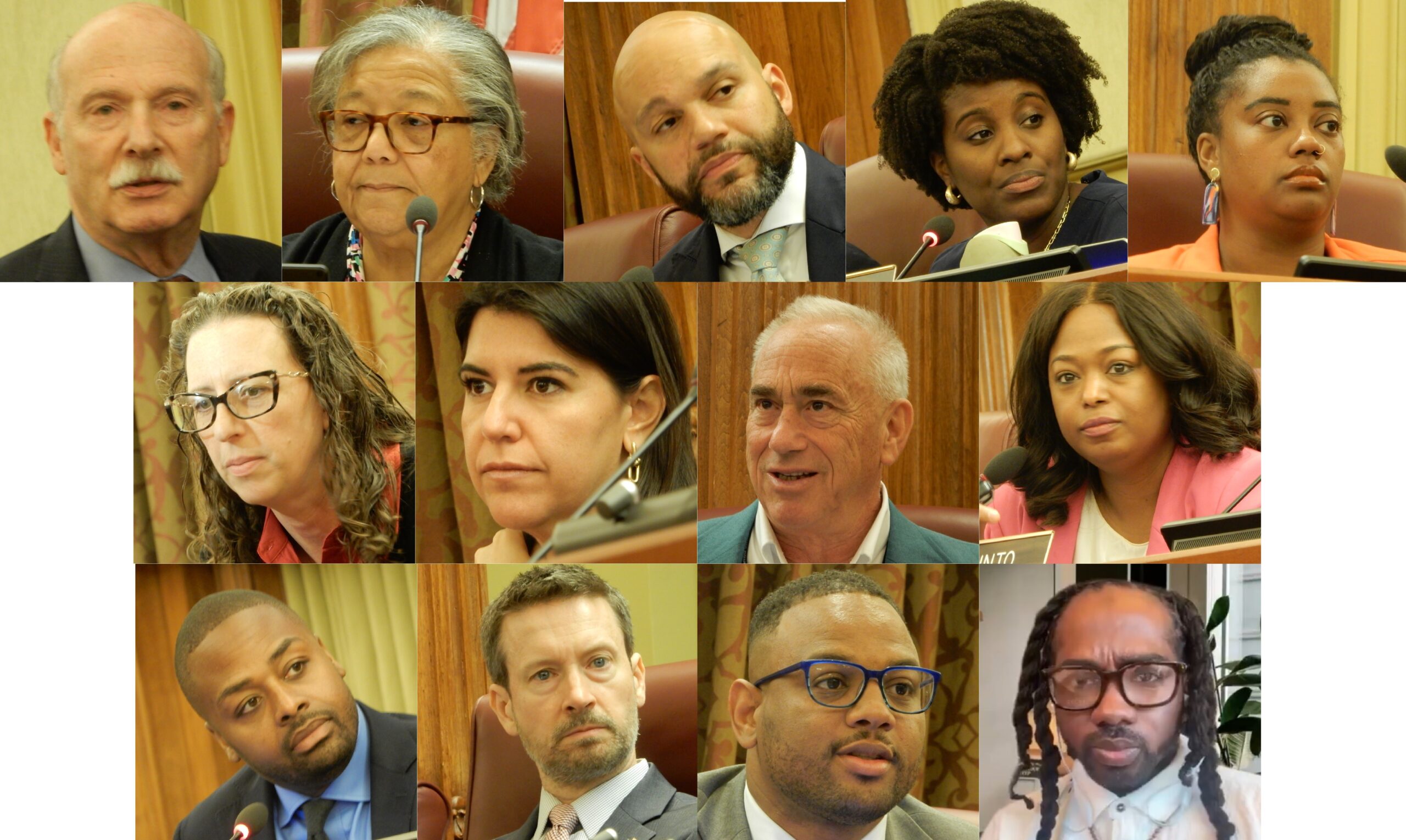
At its most recent Legislative Meeting, the Council passed, on the first of two necessary votes, the permanent version of an Open Meetings reform bill. The same bill had received a public hearing in April of 2025, and had also been previously approved twice as an emergency measure (approved by a Council supermajority, in effect for 90 days), and once previously as a temporary measure (approved twice by a Council majority, valid for 225 days). The bill seeks to balance the Council’s need to strategize and legislate effectively, the institution’s long-term commitment to open government, and the public’s stated desire for the same.
The term “open government” had its origins in the 1950s, with the process gaining full steam as part of the post-Watergate reforms. At the heart of the “open government” debate is a balance between efficiency and openness. Creating legislation in complete secrecy may be technically efficient in the short term and on the micro level, but it is deeply undemocratic and ultimately completely unproductive in the long term.
However, absolute openness could be equally unproductive and unhelpful—if every conversation between each elected official, voter, and/or interest groups on every topic could somehow be made instantly and entirely public, while this would provide perfect openness, it would be profoundly inefficient and arguably would not lead to successful public policy. With the realization that perfect secrecy and perfect openness are both ultimately unproductive from a public policy standpoint, “all” that remains is to find the proper balance between unacceptable but streamlined secrecy and laudable but inefficient openness.
The District’s Open Meetings Act of 2010 shifted that balance substantially by determining that it was not just action on policies, but also the discussions surrounding those eventual actions, that should be open to the public. As a result of those changes, it was not permitted for a quorum of Councilmembers to discuss any topic, even if no decisions or actions emerge from such a conversation, unless the meeting was open. Other than certain limited exceptions, if a quorum of Councilmembers wanted to meet to discuss a topic, advance notice of the meeting needed to be published, and the meeting must be open to/viewable by the public. If a topic to be discussed met certain criteria (such as homeland security or personnel matters), a vote could be taken to close the meeting to the public; but that vote itself must occur at a public meeting that had previously been noticed in advance.
While the mayor and the Council are officially and famously “coequal branches of government,” under the open meeting framework that existed prior to the permanent reforms passed at the most recent Legislative Meeting, the Council was at a significant disadvantage.
If, prior to a major government-wide discussion regarding a key policy area (like the budget, or a major negotiation such as the deal to keep the Wizards and the Capitals in the District), the mayor could bring together her entire team behind closed doors to hash out her policy proposal, since mayoral cabinet meetings are explicitly exempted from the open meetings law. However, there is no parallel allowance for the Council. Requiring the Council to craft initial policy proposals exclusively in public, or only in a sequence of multiple one-on-one conversations, is a barrier to efficiency that hampers collective strategic and policy planning by the Council as a body while leaving the mayor completely unfettered in this regard.
Similarly, in the present moment, the Council must often strategize how to respond to intrusions on District Home Rule by the Administration. While those intrusions are conceived and implemented behind closed doors, requiring Council meetings regarding strategic planning and potential counter-responses to be noticed and open to the public effectively amounts to unilateral disarmament in this struggle.
Members of the public and the media often decry the mayor and Council for not working together more freely and frequently. Yet when any meeting between the mayor and a quorum of the Council must be noticed in advance and fully open to the public, one imperative (openness) hamstrings a second (collaboration).
On a simpler logistical basis, potential site visits by the Council or a Council committee have always been impractical under the prior open meetings restrictions, since either smaller group visits would have been required, or else larger visits would have to be noticed in advance and be televised and/or open to the public.
The permanent measure passed on the first of two necessary votes at the most recent Legislative Meeting retains the original core principles of open meetings—that any actions (such as votes) must occur at public meetings, and that the public must receive adequate notice of any such meetings.
The emergency bill specifies that Legislative Meetings, committee markups, hearings and roundtables will remain covered by open meeting requirements, but that exceptions to the prior law’s restrictions should and do exist. These listed exceptions include chance encounters, press conferences, field trips, and retreats. An exception is also created for briefings on potential terrorist activity, major public health threats, or confidential negotiations, as long as no actions are taken at those meetings. Similarly, meetings between the mayor and Council are also explicitly exempted, as long as no actions are taken at the meetings.
Via an amendment at the most recent Legislative Meeting, all meetings of a quorum of the Council (whether in person or electronically) that are not subject to the terms of the revised Open Meetings Act must receive post hoc (after-the-fact) notice on the Council’s website. The convener of the meeting must notify the Council’s Office of the Secretary within 24 business hours of the meeting, and the Secretary must publish notice of the meeting within 24 business hours after that. The notice must include the date, approximate time, and topic of the conversation.
Other Action
In other action at the most recent Legislative Meeting, the Council approved, on the second of two needed votes, bills that would:
- update and modernize the District’s motor vehicle insurance laws, especially mandatory minimum insurance amounts, which have not seen major reform since 1986
- provide financial relief to residents of the failed River East at Grandview Condominium project including via eligibility for Home Purchase Assistance Program (HPAP) grants and conversion of past HPAP loans to grants
- establish a District Workers with Disabilities program that would allow eligible individuals with disabilities to maintain Medicaid coverage. The bill is named for Judith Heumann, the noted disability rights advocate and longtime District resident, who passed away in 2023.
- prohibit housing providers from charging tenants separately for common area fees and services, and requiring them to notify outgoing tenants of any outstanding unpaid charges within 45 days of vacating the unit
Busy Month
The upcoming five weeks will be a particularly busy time for the Council. On June 9, the Council will take its first vote on certain of the bills comprising the District’s budget. No Council meetings will be held on June 16 so that District residents can vote in that day’s primary and special elections. On June 23, the Council will take its initial vote on other bills comprising the District’s budget, as well as its second vote on the central budget bill. The Council will also hold Legislative Meetings on June 30 and July 14, and at one of those two meetings (TBD), the second vote on the final key element of the District’s budget bills will be taken.