Council Approves Curfew Changes, Including Permanent Establishment of Temporary Expanded Curfew Zone Capacity
The word “curfew” has its origins in a Norman French expression from the 1300s, “couvre-feu,” meaning “cover the fire.” Back in medieval Europe, a bell would be rung by town or church officials at nightfall, notifying all residents to cover their cooking fires so that they would not flare up overnight, igniting the home and potentially spreading to adjacent buildings or the town as a whole. Dusk was the moment of truth for the medieval couvre-feu, much as it was for kids who grew up before curfews and cell phones,who knew they had to head home when the streetlights came on.
At its most recent Legislative Meeting, the Council passed legislation extending the District’s curfew legislation. The challenge, in medieval times and for the Council, was to determine what if any restrictions needed to be placed on the community’s most important and necessary resource (then: fire; now: our youth) to maximize their community benefit without suffering the unintentional risk that can occur when an essential but powerful resource is not properly kindled, or is left unattended. The challenge lies in determining the exact details of how to strike such a balance, and that was the Council’s challenging task.
DC Curfew Background
The District has had its modern youth curfew since 1995. That legislation imposed a curfew on youth under the age of 17, in the months of September to June, from 11PM to 6AM on weekdays and midnight to 6AM on weekends, and from midnight to 6AM daily in July and August. Recent emergency and temporary legislation expanded the curfew to apply to those aged 18 and under, and dictated an 11PM start time for the curfew year-round.
In 2025, Council legislation created a new variety of youth curfew, meant to counteract social media inspired “teen takeovers,” the recent trend of flash mob-like youth gatherings advertised online and via paper flyers. Under this new class of temporary curfew, police or the mayor can designate specific, defined geographic zones for extended, temporary curfew applicability. In these zones, the expanded curfew remains in place for up to four days, would go into effect at 8PM, and would designate that only gatherings of more than eight youth would constitute a curfew violation. Zones could only be put into place for cause—either crime occurring in the zone in the prior thirty days, or that an anticipated gathering of a large group of youth (such as a teen takeover) is likely to result in public safety problems, with a cumulative 30-day limit on such curfews.
New Permanent Curfew Legislation
Approved in the first of two necessary votes at the most recent Legislative Meeting, the new permanent curfew legislation is an attempt to maximize the positives of the emergency and temporary legislation that created the new class of curfew, while responding to criticisms of both these new curfews and curfews in general.
The compromise bill requires that the announcement of all future extended youth curfew zones during the months of June, July, and August be mandatorily paired with announcements by the Department of Parks and Recreation (or a partner community group) of substantial, structured, and supervised youth programming in the same geographic area as the curfew zone. Youth traveling to or from this paired youth programming would not be in violation of the curfew itself.
Additionally, the new bill includes a change in terminology, swapping out all references throughout the entire curfew legislation–both the original 1995 law and the recent additions–replacing the word “juvenile” (most often associated with the term “juvenile justice,” with a law enforcement context baked into the term itself) with the more judgment-free word “youth.”
The bill also reverts the permanent citywide curfew hours back to the original 1995 standard: in the months of September to June, from 11PM to 6AM on weekdays and midnight to 6AM on weekends, and from midnight to 6AM daily in July and August.
Additional changes included in the compromise bill include:
- elimination of the ability of Business Improvement Districts and Main Street organizations to petition for the creation of a temporary extended curfew (while maintaining Advisory Neighborhood Commissions’ ability to petition)
- elimination of the mayor’s ability to temporarily extend youth curfews citywide as early as 8PM, with the presumption that any circumstances meriting such a geographically broad curfew expansion would merit standalone emergency legislation
- strengthening the digital notice provision regarding temporary youth curfews
- limiting law enforcement interaction with youth regarding curfew rules outside of actual curfew violations, and allowing law enforcement to issue verbal warnings about the impending onset of an extended curfew only in the half-hour preceding its start time
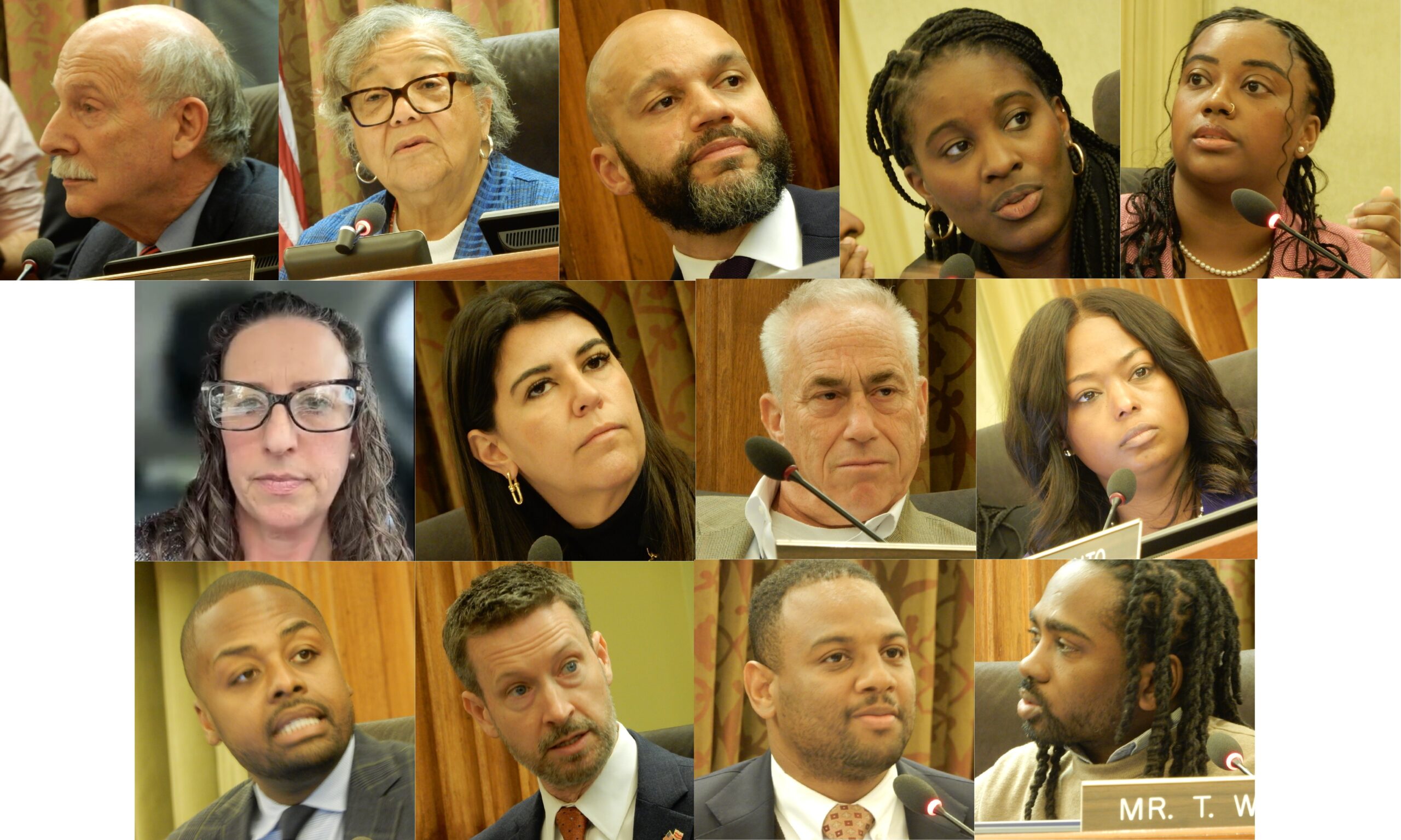
Votes on the emergency and temporary versions of legislation regarding the temporary extended curfew zones were once again delayed until a future Legislative Meeting. While votes on permanent, temporary, and emergency legislation require a simple majority of the thirteen-member Council, the Council’s required vote declaring that an emergency exists in the first place (a necessary precursor to the passage of emergency legislation) must pass with a supermajority of two-thirds, or a minimum of nine, votes.
The Council’s next Legislative Meeting is scheduled to be held on May 5.